The beginner's guide to Shards of Aeternum
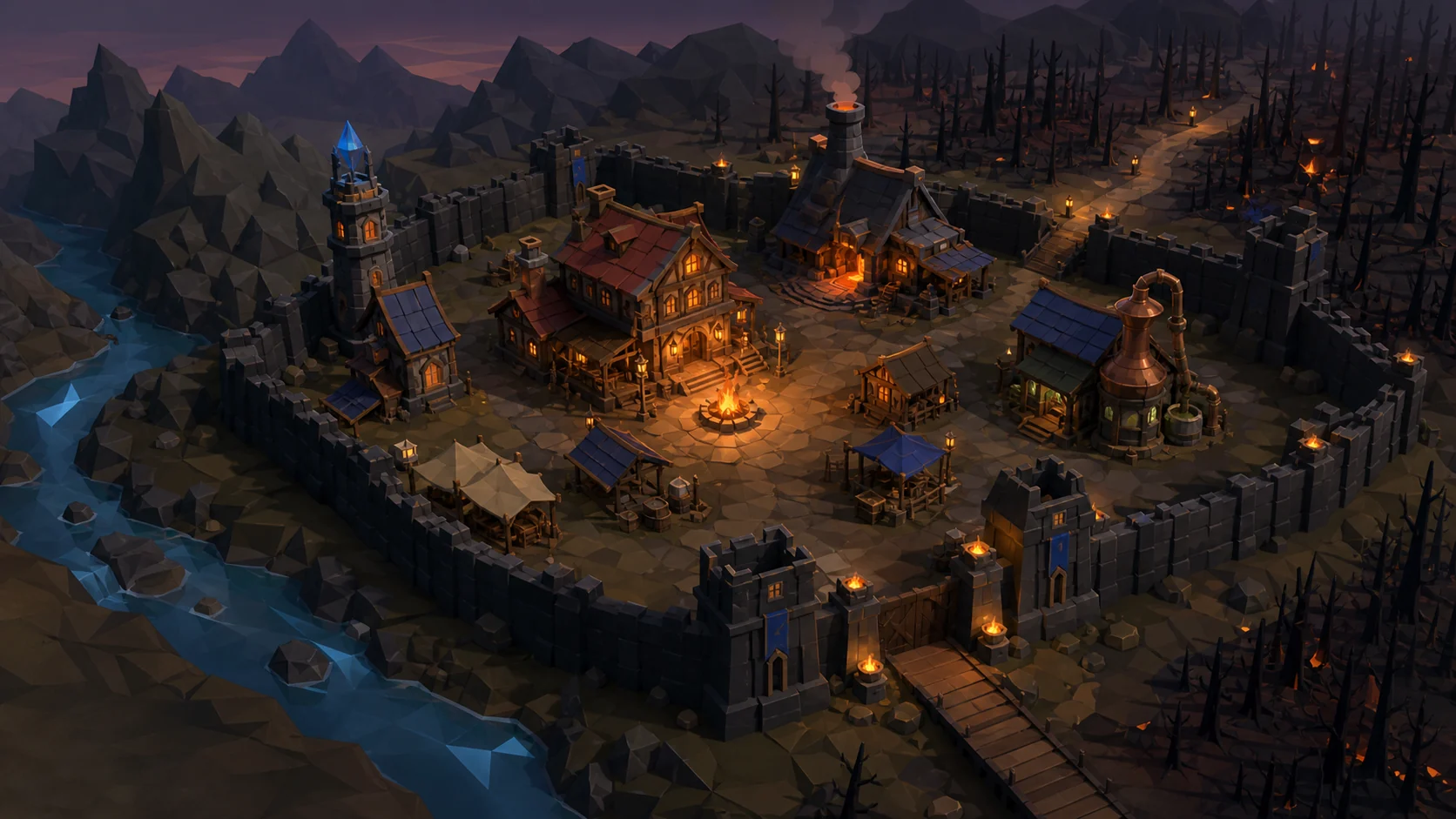
Shards of Aeternum is a free idle RPG that runs in your browser. You build one adventurer, send them beyond the wall of Emberwatch, and close the tab. The expedition keeps running without you. This page covers the whole loop: hunts, levels, the class trial at 5, gear, death, and what a guest account is worth.
The core loop, in one paragraph
Send your adventurer on a hunt. The server runs the fight in the background while you are away and pays out what was actually earned when you claim it. Spend the loot on gear, spend the levels on attributes, and both make the next hunt kill faster, which is the point. Kill rate is not a table you unlock, it emerges from your damage against the region's monsters. Better gear literally means more loot per hour, not just a safer run.
- Start a run by picking a region, a difficulty and a potion loadout. You need at least 15% health to set out.
- Wait. A run can be claimed after one minute and keeps accruing for up to 6 hours. Nothing needs the tab open.
- Claim. The server replays the fight over the elapsed time and grants the result. Claiming twice cannot double-pay you.

How offline progress actually works
Idle games differ enormously in how honest their offline progress is. Here the hunt is a server-side timer wrapped around a deterministic combat simulation, with your stats snapshotted at the moment you set out. Nothing is estimated and nothing is generated in your browser, so a run cannot be inflated by leaving a tab open, changing your clock, or editing anything client-side.
The 6-hour cap is the one rule worth planning around. A hunt started before bed will be full when you wake up; the hours past 6 are simply not paid. Claim, re-equip, send them out again.
Levels, attributes and Power Score
Every level grants 5 attribute points, from level 1 rather than from the class trial. Four attributes carry everything the simulation does:
| Attribute | What it does |
|---|---|
| STR | Weapon damage for the classes whose swing reads strength |
| DEX | Attack speed, up to a cap, and damage for the classes that read dexterity |
| INT | Spell damage, the size of the mana pool and how often a caster can act |
| VIT | Maximum health, defence, and regeneration out of combat |
Power Score is the single number the game gates content on: travel, the vault door, the leaderboard. It is calibrated on your damage and effective health together. Racial combat bonuses therefore stay deliberately small, and weapon affinities only apply while you hold one of that people's favoured families; class, attributes and gear still carry the build.
Attribute points are not a life sentence. The Loremaster sells a respec for a scroll or a scaling amount of gold, so an experiment costs money rather than a character.
The class trial at level 5
Everyone starts as a Drifter: plain melee, no resource bar, no skill. At level 5 a one-time class trial opens five real classes (Wallwarden, Ashstalker, Emberbinder, Charshot, Shardburner), each with a resource, a signature skill and a different balance of damage and survival.
The choice is permanent, and it is the single biggest decision in the early game. The class guide compares all five and the ten specialisations that open at the second trial.
Dying, healing and potions
Death ends the run, forfeits the loot that run had gathered, and costs experience. It never deletes your character or your bag. You recover at the Emberwatch Inn. Resting by the fire heals over time for free, or you can pay a level-scaled price to be patched up on the spot.
Potions are the answer to the runs you are not there to watch. A loadout is set before you leave and fires automatically during the hunt, offline included; while you are watching a live fight you can also drink one by hand. Going out at a difficulty you can barely survive with no potions loaded is the most common way a new adventurer loses 6 hours of progress.
Guest accounts, and the 7-day clock
You can start playing in one click with no email address. A guest gets a whole character, race and passives included, and plays up to level 10. A guest account is deleted 7 days after it is created unless an email is attached to it first, at which point it stops being a guest and stops expiring.
The deadline is measured from creation rather than from your last login, deliberately: "7 days to decide" is a sentence you can hold, while a rolling clock punishes going on holiday. The countdown is shown on every screen and turns red in the last two days.
Where to go after level 5
- Take a trade. All 9 are open to one character and learning one is permanent.
- Work the notice board. Daily, weekly and monthly notices pay in goods, and the monthly pays in stages rather than pass-or-fail.
- Push the difficulty ladder in the Emberwood Outskirts before trying the Stonebound Vault, which is a dungeon with a door of its own.
- Turn up for a world boss. Everyone who takes part is paid, and the killer is paid more.